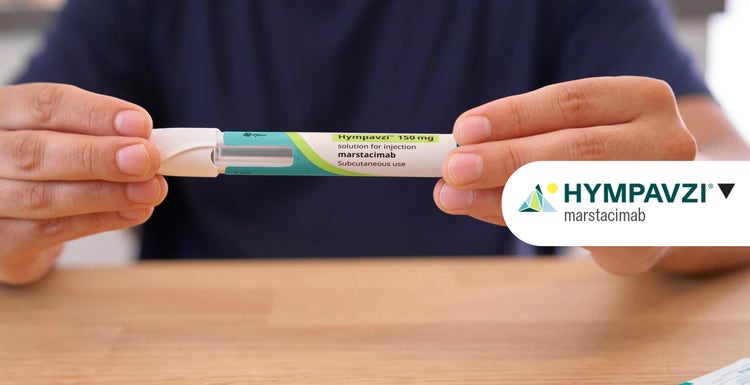
This website is intended for use by patients prescribed HYMPAVZI®▼ (marstacimab) in the UK, and has been developed and funded by Pfizer Ltd.
This information is not intended to be a substitute for advice provided by a healthcare professional. For advice, please consult a healthcare professional.
Adverse event reporting information can be found at the bottom of this page.
About Haemophilia and HYMPAVZI
What is haemophilia?
Haemophilia is an inherited genetic condition that affects the ability of the body to make blood clots and stop any bleeding.
It is caused by a lack of specific proteins that promote blood clotting, called coagulation factor VIII (haemophilia A) and coagulation factor IX (haemophilia B).
-
What is coagulation?
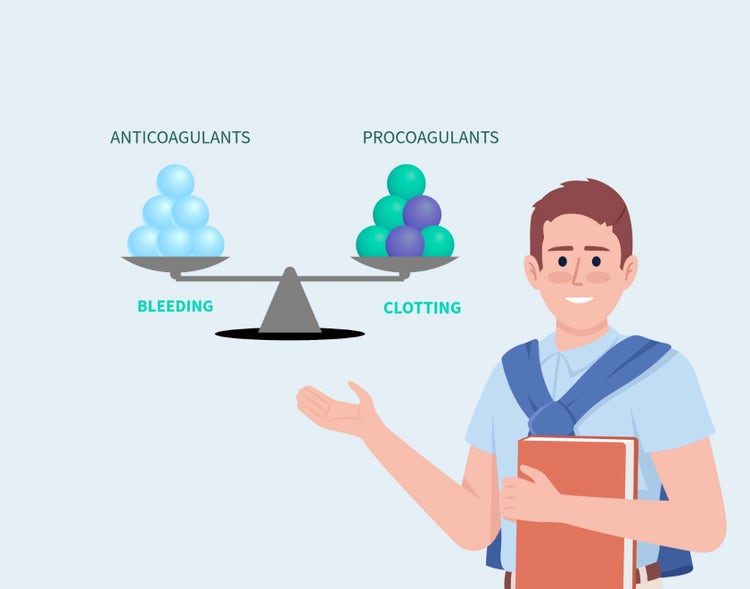
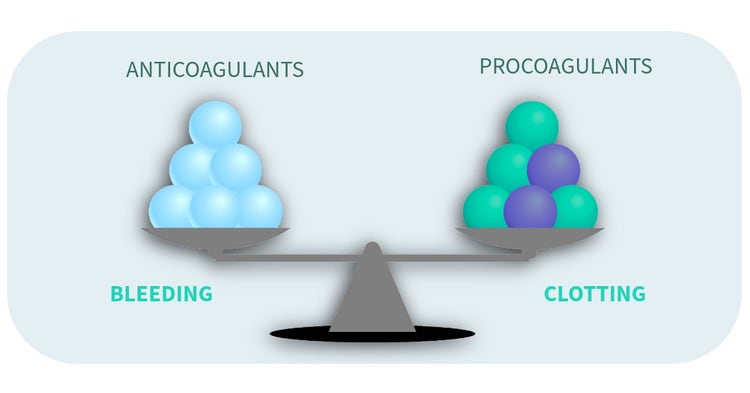
When procoagulants and anticoagulants are balanced, they achieve coagulation.
Coagulation is the process by which blood forms a clot to stop bleeding after an injury. It occurs through a series of reactions involving procoagulants, which promote clot formation, and anticoagulants, which limit the process so clotting stays localised to the site of injury and does not occur excessively.
This can be pictured as a scale of different components. These components work together to control bleeding and repair the body after an injury.
What about coagulation in haemophilia?
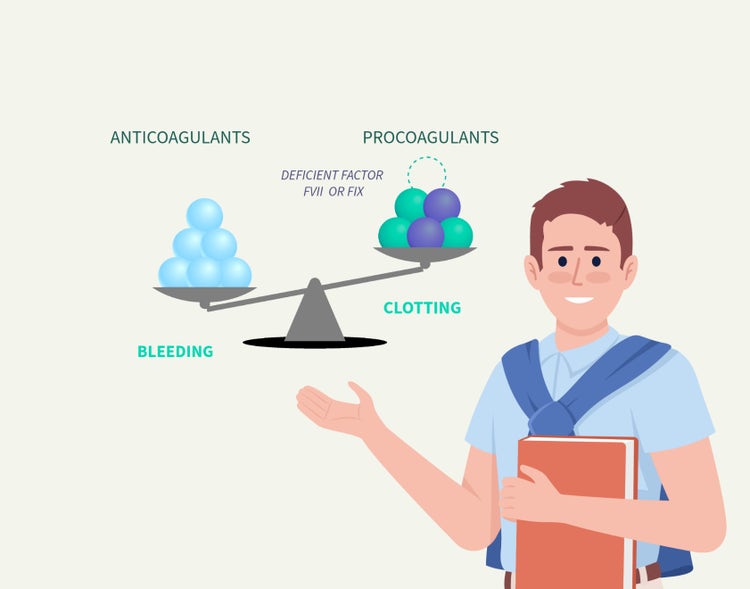
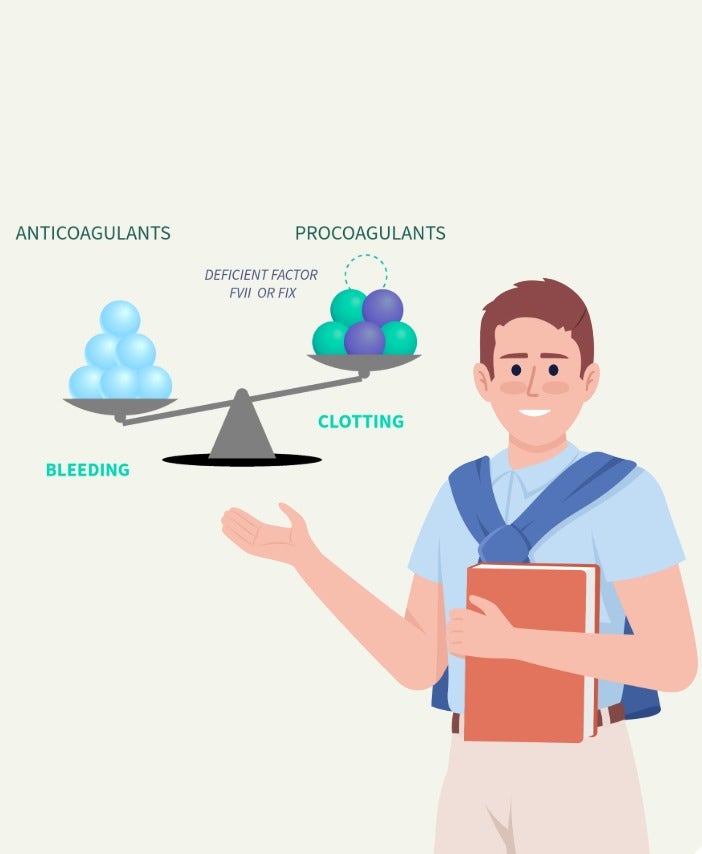
People with haemophilia have less procoagulants in their blood. For haemophilia A, Factor 8 (VIII) is deficient, and in haemophilia B, Factor 9 (IX) is deficient.
This means the balance is off and the anticoagulants prevent blood from clotting, resulting in bleeding.
How does HYMPAVZI work to help promote coagulation?
Think of the body’s clotting cascade as a scale evenly balanced between two sides – one with procoagulants and the other with anticoagulants.
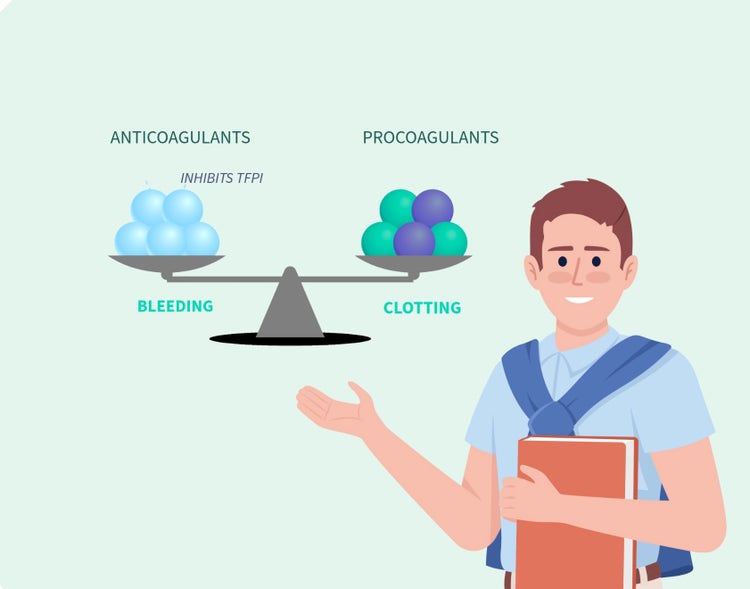
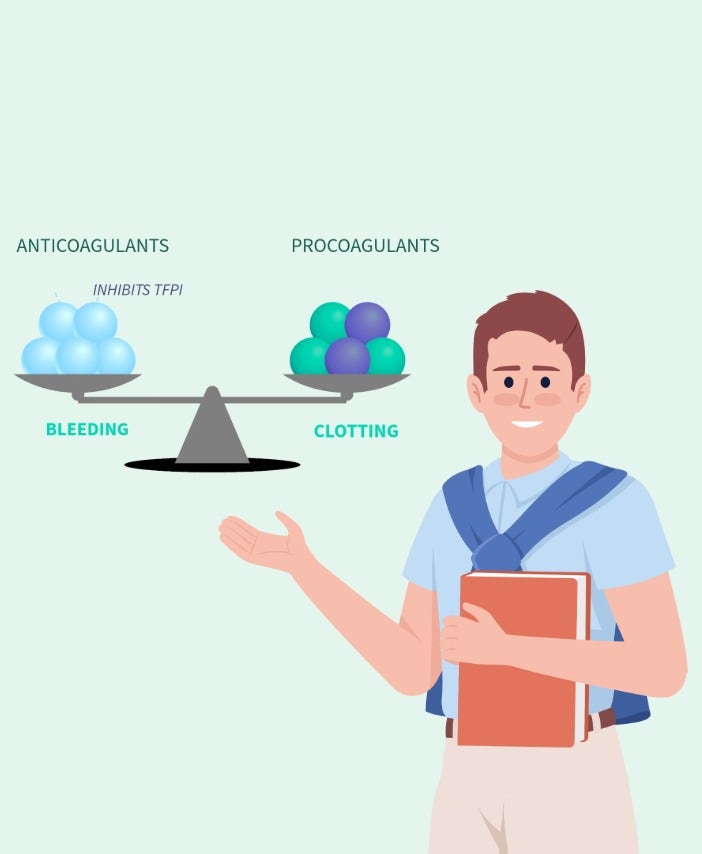
Coagulation may be achieved by either replacing the missing procoagulant (FVIII or FIX), or instead, removing an anticoagulant, as seen in the image on the right.
HYMPAVZI targets an anticoagulant in the clotting cascade called tissue factor pathway inhibitor (TFPI). This promotes the formation of thrombin, which increases clotting and stops bleeding.
Subheader
Click here to learn more
1. The coagulation cascade (how blood normally clots)
Step by step:
- A blood vessel is injured
- The body sends a signal to start clotting
→ A series of clotting proteins are activated one after another, like dominoes falling.
This chain reaction is called the coagulation cascade. - Factor X is switched on
→ This is a key point in the cascade. Once Factor X is active, clotting really takes off. - Thrombin is made
→ Thrombin is the “builder” that turns fibrinogen into fibrin threads. - A stable clot forms
→ The fibrin threads form a strong mesh that seals the vessel.
2. What happens in someone with haemophilia
In haemophilia:
- Haemophilia A → missing or low Factor VIII
- Haemophilia B → missing or low Factor IX
These factors are needed to amplify the cascade.
The result:
- The domino chain is weak or slow
- Not enough Factor X is activated
- Too little thrombin is made
- Clots are small, fragile, or delayed
So, bleeding lasts longer.
3. What is TFPI and what does it normally do?
TFPI (Tissue Factor Pathway Inhibitor) is the body’s natural brake on clotting.
Think of it as a safety switch:
- It slows down clotting so we don’t form dangerous clots when we don’t need them.
- It mainly blocks early clotting signals, before enough Factor X and thrombin are made.
In people without haemophilia, this balance works well.
4. How anti‑TFPI therapies, like HYMPAVZI, work in people with haemophilia
The core idea:
Instead of adding missing factors, anti‑TFPI therapies remove the brake.
What anti‑TFPIs do:
- They block TFPI
- This lets the clotting signal run stronger and longer
- More Factor X is activated
- More thrombin is generated
- A stronger clot can form — even without FVIII or FIX
Subheader
Procoagulant
Anticoagulant
Coagulation
The balance of procoagulants and anticoagulants in the blood to control bleeding and repair the body after an injury.
Clotting Cascade
Clotting Factors
Tissue Factor Pathway Inhibitor (TFPI)
Thrombin
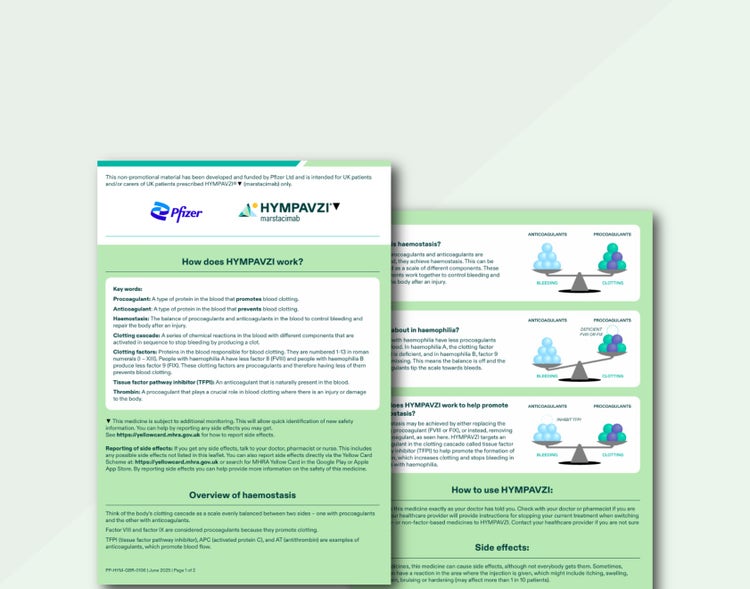
Patient Mechanism of Action Leaflet
If you get any side effects, talk to your doctor, pharmacist or nurse. This includes any possible side effects not listed in the package leaflet. You can also report side effects directly via the Yellow Card Scheme at https://yellowcard.mhra.gov.uk or search for MHRA Yellow Card in the Google Play or Apple App Store. Any suspected side effects may also be reported to Pfizer medical information on 01304 616161. By reporting side effects, you can help provide more information to the safety of this medicine.